A friend and I were discussing the frustration of the ease of which I kids can stumble upon pornography and other degeneracy online.
I explained the techniques I use with fire-walling and DNS resolver configuration (see blog post TBA). Being a technical fellow, he pointed out some weaknesses in my strategy.
To my mind, and in our household, DNS filtering is everything. With the help of trusted DNS providers, I can limit the exposure to questionable material, limit malware phone-home risks, and greatly reduce the tracking and data-mining of my family by the new robber barons.
So as laid out in blog post TBA, we as consumers of technology make a conscious decision, usually involuntary, in where your DNS queries are resolved. This has consequences.
I commented to my friend, what is really starting to worry me are that there is evidence that some devices (Google Home) and apps are starting to use hard-coded DNS resolvers, ignoring the resolver settings offered by DHCP on your LAN, or specifically configured in the settings on your PC.
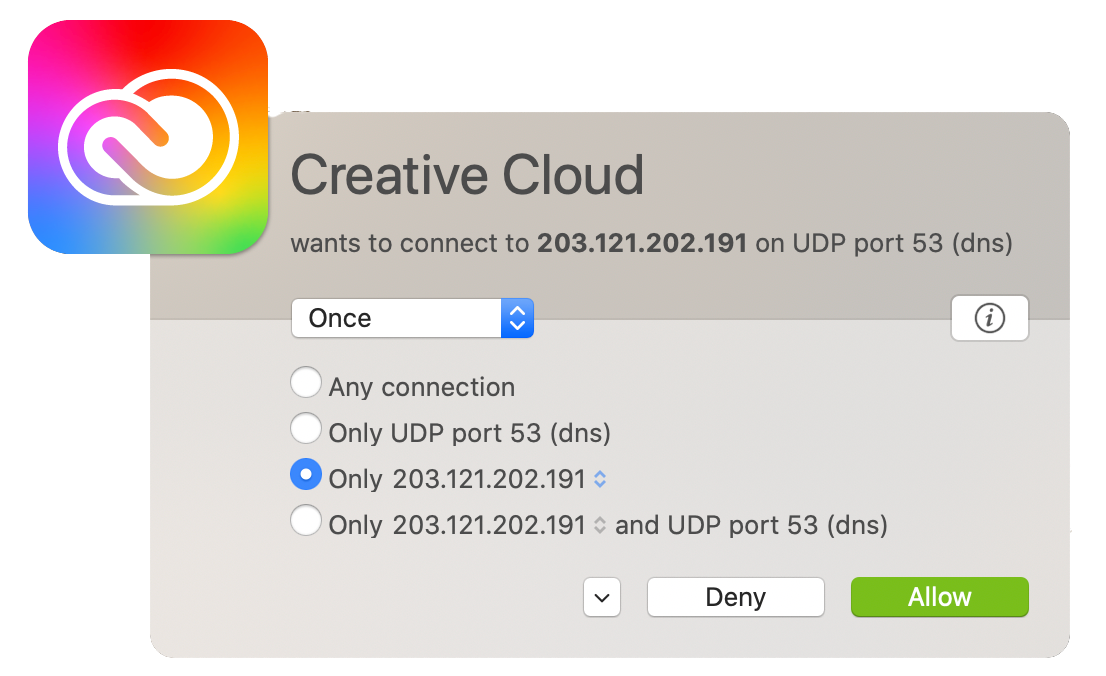
Adobe software caught with LittleSnitch using their own DNS servers
This circumnavigation of your choices is an attack on your tech sovereignty.
Newer DNS protocols offer encryption to protect privacy, and some browsers are now ‘offering’ to use their DNS-over-HTTPS (DoH) servers to protect you. (See Firefox offering Cloudflare’s DNS)
In principle this is true, it is a protection. Until Cloudflare, the DNS provider, decide or are pressured into removing certain domains from their resolver results. Content delivery networks that refuse to take down material that questions election integrity or criticising the coercion of experimental gene therapy upon the healthy for example.
The web browser market, like big tech themselves is terribly concentrated. I worry it would not take much to have vast segments of the population further deprived of their tech sovereignty by the concentration of control through web browsers, circumventing users choice on DNS resolution.
The browser itself becomes an externally controlled platform.

Artwork from the ‘inconvient’ and violent Utopia TV (2020)